
Sem comentários, nem circunlóquios, nem perífrases...


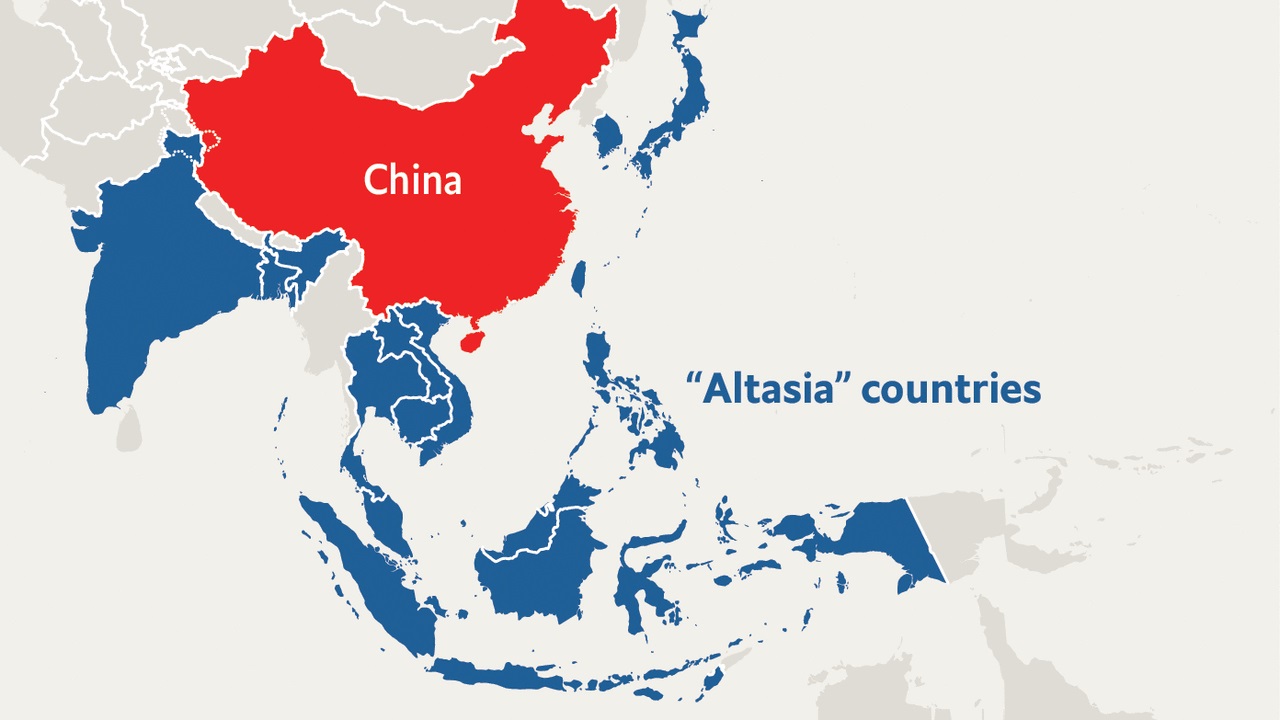


Os nossos amigos da "Conflits" publicam e aconselham, como "leituras de Verão",
Des cartes pour comprendre le monde
Um reputado e respeitado analista americano do terrorismo e do crime organizado disse há uns tempos que o maior cartel mexicano do tráfico de droga se situava no interior da polícia. E que, acrescentou este velho amigo da equipa IntelNomics, muitas das operações “anti-droga” da polícia eram guerras entre cartéis pelo controlo do tráfico, de circuitos e de território. Em Moçambique, cuja maior exportação é a heroína, a situação é (guardadas as devidas diferenças, claro) muito semelhante, segundo o documento (datado de Julho 2018) que abaixo se cita e regista. Ignorar este facto quando se aborda a “tragédia de Cabo Delgado” e seus “ataques jihadistas do terrorismo islamista” é um erro estratégico e é a garantia de fracasso. Nem de resto, sem ter este facto em conta, é possível explicar a situação no terreno nem a longa recusa do auxílio estrangeiro de Maputo... Se a recente evolução (intervenção das tropas ruandesas e aceitação da formação de grupos de forças especiais por Portugal, USA e outros ocidentais) travará ou não a "evolução" de Moçambique para narco-estado e para uma espécie de somalização é a grande incógnita no horizonte daquele país lusófono.
The Uberization of Mozambique's heroin trade
Joseph Hanlon | Published: July 2018
Department of
International Development
London School of
Economics and Political Science
Tel: +44 (020)
7955 7425/6252 London
Fax: +44 (020)
7955-6844 WC2A 2AE UK Email: J.Hanlon@lse.ac.uk
Website: http://www.lse.ac.uk/internationalDevelopment/home.aspx
Acknowledgement:
This research was partly funded and facilitated by the Global Initiative against Transnational Organized Crime, as background for their paper "The Heroin Coast: The political economy of heroin trafficking along the eastern African seaboard", by Simone Haysom, Peter Gastrow and Mark Shaw. Thanks to Global Initiative for permission to publish the more detailed background paper here.
Abstract:
Mozambique is a significant heroin transit centre
and the trade has increased to 40 tonnes or more per year, making it a major
export which contributes up to $100 mn per year to the local economy. For 25
years the trade has been controlled by a few local trading families and tightly
regulated by senior officials of Frelimo, the ruling party, and has been
largely ignored by the international community which wanted to see Mozambique
as a model pupil. But the position is changing and Mozambique may be coming
under more donor pressure. Meanwhile the global move toward the gig economy and
the broader corruption of Mozambican police and civil service makes it easier
to organise alternative channels, with local people hired by mobile telephone
for specific tasks. Mozambique is part of a complex chain which forms the east
African heroin network.
Heroin goes from Afghanistan to the Makran coast of Pakistan, and is taken by dhow to northern Mozambique. There, the Mozambican traffickers take it off the dhows and move it more than 3000 km by road to Johannesburg, and from there others ship it to Europe.
Keywords:
Mozambique, heroin, drugs, transnational crime, smuggling, Whatsapp
Heroin has been
one of Mozambique's largest exports for two decades and the trade is
increasing.
Heroin is produced in Afghanistan and shipped through Pakistan, then moved by sea to east Africa and particularly northern Mozambique. From there it is taken by road to Johannesburg, from which it is sent to Europe. This basic route has remained unchanged for 25 years. Estimates vary from 10 to 40 tonnes or much more of heroin moving through Mozambique each year. With an export value of $20 million per tonne, heroin is probably the country's largest or second largest export (after coal). It is estimated that more than $2 mn per tonne says in Mozambique, as profits, bribes, and payments to senior Mozambicans.
Heroin arrives on dhows 20-100 km off the coast. The Mozambican role is to take it from the dhows, move it by small boat to the coast and then by road to warehouses, and finally take it by road 3000 km to Johannesburg, South Africa. The 10-40 t/y estimate is from dhows only, and further significant amounts of heroin also arrive in containers of other imports, particularly at the northern port of Nacala.
Until recently, the trade was carried out by south-Asian-origin families based in the north of Mozambique and was tightly regulated by the most senior figures in Frelimo.
The trade has been well known since 2001 when an article was published in Metical, and it said heroin was then Mozambique's largest export. Frelimo regulation means there have been no drug wars between the trading families, and little heroin remains in Mozambique. With one exception (the United States in 2009-10), the international community has chosen to ignore the regulated heroin trade - other issues ranging from natural gas to corruption have been seen as more important.
 Mozambique is a transit centre for heroin.
Like any commodity, there is a supply chain and there are points between the
producer and final buyer where the commodity must be warehoused to await an
order or be repacked to satisfy an order, which is Mozambique's role. The chain
is that heroin hydrochloride (white powder or grey crystal blocks) is produced
in Afghanistan, passes through Pakistan and Iran and is moved to northern
Mozambique. It is warehoused and repacked and then goes by road to
Johannesburg. From there it is sent to Europe.
Mozambique is a transit centre for heroin.
Like any commodity, there is a supply chain and there are points between the
producer and final buyer where the commodity must be warehoused to await an
order or be repacked to satisfy an order, which is Mozambique's role. The chain
is that heroin hydrochloride (white powder or grey crystal blocks) is produced
in Afghanistan, passes through Pakistan and Iran and is moved to northern
Mozambique. It is warehoused and repacked and then goes by road to
Johannesburg. From there it is sent to Europe.Heroin production is increasing in Afghanistan. But tighter control of transit through eastern Europe is moving the trade to southern routes, and more controls in Kenya and Tanzania has moved sea landings south to northern Mozambique. The trade appears to be increasing significantly. This, in turn, led to an investigation by the Geneva-based Global Initiative against Transnational Organized Crime, just published: "The Heroin Coast: The political economy of heroin trafficking along the eastern African seaboard", by Simone Haysom, Peter Gastrow and Mark Shaw. The report argues that the heroin trade has "political protection" and that "in Mozambique, we find a tight integration between ruling party figures and traffickers."
The report continues: "individuals in Frelimo have become implicated in criminal activities, and … the party’s own system for generating funds relies on a lack of the rule of law."
Despite the heroin trade being well known to embassies, it was only on 1 June 2010 that US President Barack Obama designated Mohamed Bachir Suleman (MBS) as a "drugs kingpin", making it illegal for US citizens, US companies, and businesses which operate in the US to conduct financial or commercial transactions with him or three of his businesses. MBS is a major businessman and trader, and he works with at least three other south-Asian origin trading families.
They use their own facilities and staff and mix illegal and legal commerce. MBS is believed to still control a large part of the heroin trade through Mozambique, but his position and that of linked families may have diminished.
On the other hand, there is a move in East Africa which reflects the global trend of Uber and Airbnb, away from using established business networks and warehouses, to a looser system of freelance workers controlled via WhatsApp and BlackBerry. Meanwhile petty corruption within Mozambique has become so endemic that the heroin trade can run on bribes and no longer needs political patrons. This leads to what one of my sources described as a move to "disorganised crime", which appears to be handling much of the new increase in heroin trade.
This working paper is based on the background paper on Mozambique written for Global Initiative by Joseph Hanlon. This working paper has five sections.
The first section looks at MBS, the biggest heroin trader, medium-size traders, and at political patronage. The second section is about the national and international politics of Mozambique's regulated heroin trade. The third section sets out what is known about the physical heroin trade and movements within Mozambique. The final sections look at the recent growth of a parallel unregulated trade in Mozambique and at the global context of a criminal gig economy.
Mozambique's own drug baron
President Joaquim Chissano was the guest of honour at the wedding of the second son of Mohamed Bachir Suleman (MBS) on 19 April 2001. An article in the biggest weekly newspaper, Savana (27 April 2001), described the wedding was as "sumptuous" and said there were 10,000 guests from all over the world.
For a country less than a decade out of war, this was massive and ostentatious spending. MBS was also known as a major contributor to Frelimo. He is one of Mozambique’s most prominent and wealthiest businessmen and his wealth did not come only from importing refrigerators and washing machines for his Kayum Centre.
Also in 2001, I was briefed by an international drugs control official that his business, Grupo MBS, was the main heroin trader in Mozambique.
Links to MBS were passed on to Armando Guebuza when he was elected President in 2004. He twice publicly visited MBS's Maputo Shopping Centre (22 June 2006 and for the official opening 8 May 2007). The $32 mn complex was then the largest in Mozambique, and Guebuza praised it a model of private investment. MBS was reported to have made a $1 million contribution to President Armando Guebuza's 2009 electoral campaign. But those links may have been through Guebuza's children.
In 16 November 2009 and 25 January 2010 cables, Todd Chapman, Chargé d'Affaires at the US Embassy in Maputo, alleged that MBS "has direct ties to President Guebuza and former President Chissano" and that MBS is the coordinator of heroin going through Mozambique and perhaps southern Tanzania.
Then on 1 June 2010, US President Barack Obama designated MBS as a "drugs kingpin", making it illegal for US citizens, US companies, and businesses which operate in the US to conduct financial or commercial transactions with him or three of his businesses, Grupo MBS, Kayum Centre and Maputo Shopping Centre.
The US Department of the Treasury stated that "Mohamed Bachir Suleman is a large-scale narcotics trafficker in Mozambique, and his network contributes to the growing trend of narcotics trafficking and related money laundering across southern Africa. Suleman leads a well-financed narcotics trafficking and money laundering network in Mozambique." In the next section we point out that this was a unique intervention, even though the international community knows about the heroin trade.
The close link between MBS and Chissano is said to reflect a complex relationship. The heroin trade was regulated at the highest level. Chissano is said to have regularly met personally with MBS, and probably with the heads of the other heroin trading families.
MBS was publically identified as a major donor to Frelimo. It has been widely assumed that there was an agreement to regulate the trade. There have never been drug wars between the heroin families and no convictions - and in the past two decades, no arrests - of senior figures in the heroin and hashish trades, and no seizures of heroin passing through the regulated trade.
The Ministry of Interior, police and customs receive their commissions and assist the trade. Frelimo receives a substantial amount of money for operating costs and election expenses, and one assumes some members of the Frelimo leadership personally receive a part.
Chissano had been Frelimo head of security since 1966, and he had the personal contacts needed to organise and regulate the trade.
There is no direct evidence of high level regulation, and any witnesses to such meetings are unlikely to speak out. It is speculated that part of the deal is that the heroin is intended for international transit and the traders agree that little stays in Mozambique.
In the early 2000s, the military housing zone in central Maputo became known as "Columbia" because drugs were so readily available, and some the children of the elite because heroin users.
This was widely publicised and then suddenly heroin became less available. Did Chissano tell MBS to stop selling locally? Clearly something happened, because cocaine and particularly crack are still readily available, suggesting lack of regulation of the cocaine trade.
Other players
Although MBS is a big man in Mozambique, he is part of a chain running from the Indian subcontinent. Under MBS, Global Initiative identifies three linked families with businesses in Nacala .....
A escalada de tensão à volta de Taiwan está já a aquecer a “guerra fria” instalada pelos sucessivos desafios da China aos Estados Unidos e sequentes e ‘delicadas’ respostas de Donald Trump. No Indo-Pacífico, o clima atinge temperaturas nunca vistas. O ciberespaço é uma permanente ciberguerra ainda, por enquanto, relativamente controlada. Este cenário que estamos a viver, num exercício de equilíbrio à beira do precipício, foi, há anos, antecipado numa ficção “muito bem aviada” (como diria o saudoso João Isidro) do francês Guy-Philippe Goldstein, num thriller com o título “Babel Minute Zéro”. O “Le Monde” não lhe poupou elogios. Não haverá um editor português que se atreva a…?

Livres | Guy-Philippe Goldstein: le chaos en temps réel
Le romancier est l'auteur d'un étourdissant thriller géopolitique.
Par Franck Nouchi | Le Monde | 26 avril 2007
Ce qui est improbable n'est jamais impossible. En ce 29 juin, on doit être en 2017, une icône d'alerte provenant de l'édition électronique du New York Times apparaît sur l'ordinateur de l'agent de la CIA Julia O'Brien. Un vaste mouvement de contestation vient de débuter dans le sud de la Chine à la suite de l'assassinat, à Hongkong, du journaliste Zhu Tianshun, l'un des dirigeants du camp démocratique.
Ce même jour, Julia, une intime du président des Etats-Unis, Jack H. Brighton, doit s'envoler pour Berlin afin d'y enquêter sur un ex-nazi dénommé Alberich. Le régime de Pékin, pour préserver le pouvoir du Parti communiste et éviter une guerre civile, décide d'envahir deux îlots appartenant à Taïwan et d'accuser les dirigeants nationalistes du meurtre du journaliste...
Ainsi commence Babel minute zéro, le récit d'une bataille en quatre actes, qui conduira le monde au bord de l'apocalypse ; un extraordinaire thriller politique écrit par un jeune Français de 32 ans, Guy-Philippe Goldstein. Plus de six cents pages menées tambour battant à la manière des meilleurs spécialistes américains du genre.
De passage à Paris - il vit à New York où il est consultant en stratégie d'entreprise -, Guy-Philippe Goldstein raconte comment l'idée de ce livre lui est venue, il y a dix ans.
"J'ai toujours été fou de politique internationale. Je lis tous les jours énormément de journaux, Le Monde, le New York Times, le Washington Post et bien d'autres encore; des revues comme Foreign Affairs; des blogs spécialisés." Son auteur de romans d'espionnage préféré? "John Le Carré, assurément. George Smiley est un très grand personnage romanesque."
A le lire, pourtant, c'est plutôt à Robert Littell que l'on pense, à cette manière de mettre en scène des individus qui possèdent, entre leurs seules mains, le pouvoir d'influer sur la destinée du monde. Le Carré, de par son mode d'écriture, est un maître du temps qui passe. Rien de tel chez Goldstein qui écrit "efficace" de manière à constamment accélérer le temps pour mieux l'étirer. Ses codes - le personnage de Julia, le principe du compte à rebours ultime avant la destruction de l'humanité, le fait qu'une grande partie du livre se passe dans les lieux de pouvoir les plus secrets de la planète - sont ceux des livres et des films américains d'espionnage. Remarquablement scénarisé, Babel minute zéro se lit comme on regarde les meilleures des séries TV (A la Maison Blanche, 24 heures chrono): avec avidité et jouissance.
Par-delà l'action, on est frappé par la capacité de Goldstein à rendre plausible une histoire aussi compliquée. Sa manière de décrire les arcanes du pouvoir chinois est telle que l'on a peine à croire qu'il n'a jamais fréquenté les couloirs et les antichambres du Zhongnanhai, le vaste Kremlin chinois. Quant à sa connaissance d'Internet et des fondements de la guerre informatique, elle est tout simplement ahurissante. "Il y a dix ans, explique Guy-Philippe Goldstein, quand j'ai commencé à écrire ce roman, je voulais essayer de comprendre ce que serait l'avenir de la guerre entre les grandes puissances."
FOLIE TECHNOLOGIQUE
Dans Babel minute zéro, l'ennemi se propage à une vitesse vertigineuse. On pense à Henry Kissinger qui disait, en substance: "Je ne crois pas à la guerre, sauf si nous sommes débordés." De fait, hormis Julia, tout le monde est débordé, affolé, le président des Etats-Unis, mais aussi les dirigeants chinois, taïwanais, russe, français, allemand. Le monde est à une minute du chaos.
On s'en voudrait de déflorer ici l'histoire. Les hommes ont engendré une folie technologique qui, à l'évidence, est en passe de leur échapper. "Vous savez, confie Guy-Philippe Goldstein, je n'invente pas grand-chose, la plupart des grandes puissances possèdent aujourd'hui des unités spécialisées dans la guerre informatique, à commencer par la Chine qui est sans doute la plus en avance de ce point de vue."
A la fin de son livre, il publie un certain nombre de "notes annexes" dans lesquelles on apprend, par exemple, qu'en juillet 1999, la Chine semble avoir été à l'origine d'attaques informatiques contre les réseaux bancaires de distributeurs automatiques de billets de Taïwan... C'est cela le plus extraordinaire dans Babel minute zéro: cette sensation que tout ce qui y est décrit est possible, qu'il suffirait, demain, qu'un journaliste chinois soit assassiné pour que cette histoire s'enclenche, que le réel rejoigne la fiction.
Le roman touche à sa fin. Dans son journal, Julia, qui se trouve peut-être dans la région de Novossibirsk, écrit: "Dans dix ans, dans un siècle ou dans mille ans. L'accumulation du savoir ne peut être arrêtée. Ce qui a été créé sera un jour employé. Peut-on détruire le savoir qui peut nous détruire?... Je me souviens de la tour sud. Je me souviens de Babel. Ce qui est improbable n'est jamais impossible. Avec le temps, ce qui est improbable finit par être possible."
Babel Minute Zéro de Guy-Philippe Goldstein. Denoël, 650 p., 22 €.
Avant que le compte à rebours ne commence, on peut se reporter au site: www.babelminute0.com.
Franck Nouchi


Na última edição do 'New Statesman', Adam Tooze escreve sobre:
"on how the US military is planning another
century of global domination" e analisa o papel determinante nesse plano do ainda muito misterioso “Third
Offset”.
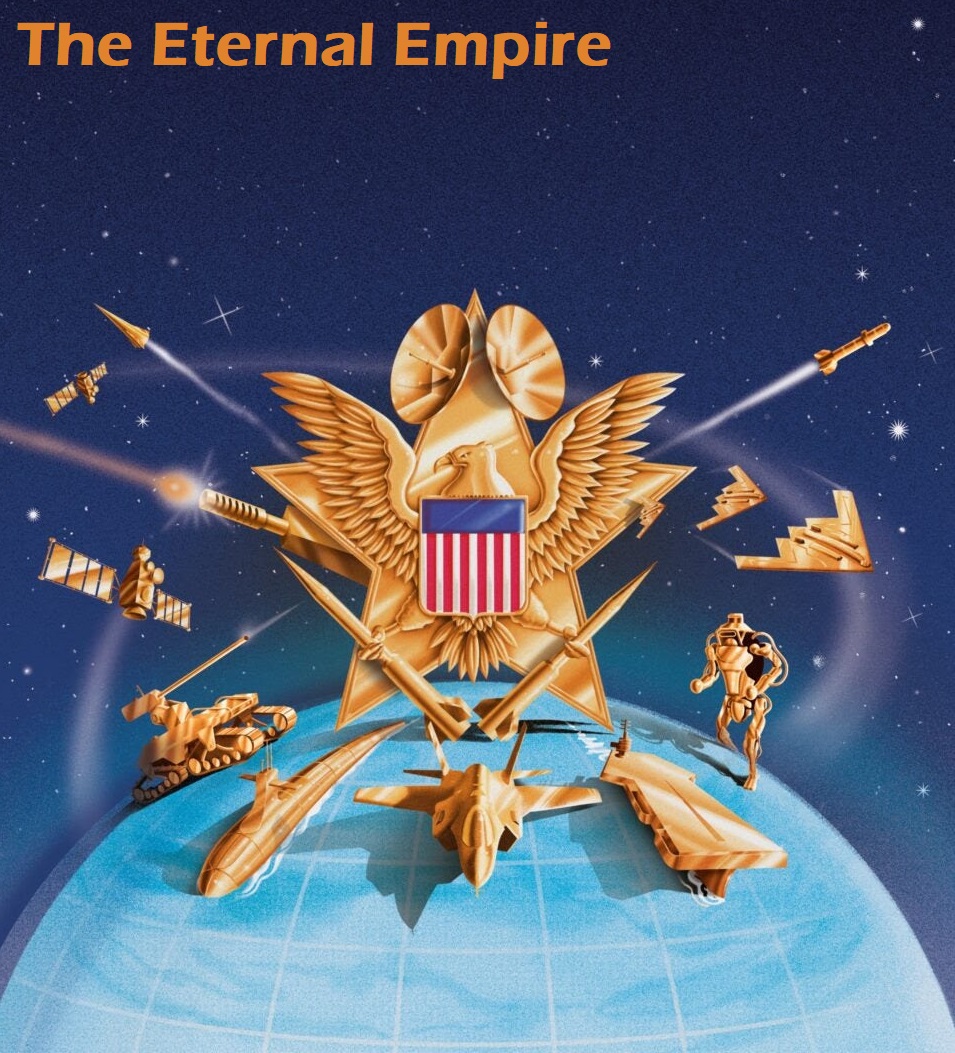
“THE THIRD OFFSET”
(...) As a new history published by the Rand think tank reveals, in 2012 a clique of Pentagon officials began to discuss something they called, somewhat mysteriously, the “third offset”. The idea of the offset was that through technological superiority the US would maintain its decisive edge in a challenging, increasingly multipolar world.
With the occupation of Iraq reduced to a bare minimum and the handover in Afghanistan completed, in 2014 the military’s reorientation began. Vladimir Putin’s incursions in Ukraine and mounting anxiety in Eastern Europe confirmed the need to face new antagonists. But China was always envisioned as the true great-power rival.
To counter China, US soldiers looked towards transformative technologies – AI, robotics, cyber weapons and new space technology. For this the Pentagon would need to refashion the military-industrial complex. The technology would come from Silicon Valley, which was deeply enmeshed in global supply chains and technological partnerships with China. Rather than remodelling Afghan villages, US military planners now envisioned rewiring nothing less than the main engines of globalisation.
Aligning the giant Pentagon machine with such abstract goals was a struggle. But China’s rise was relentless and the idea of a fundamental reorientation of US strategy carried across to Donald Trump’s time in office. The National Defense Strategy of 2018 defined America’s future challenge as great-power competition with peer or near-peer antagonists, not counterterrorism. The main arena was not Central Asia or the Middle East, but the Indo-Pacific. The Biden administration is doubling down on this strategic blueprint.
The talk about the third offset mattered because it took place at the heart of American power and bore directly on one of its mightiest instruments – the enormous budgets of the Pentagon and the intelligence community. If the war on terror was big business, once you get to the Pentagon budget proper, the numbers are even more impressive. In 2001 the US defence budget stood at $311bn. By 2010 driven by the war on terror it had more than doubled to $690bn. Then, under the budget cap imposed by the deadlock between the Obama White House and the Republican Congress, spending fell to $560bn in 2015. Trump reversed that decline with a defence budget of above $700bn. Biden’s latest proposal continues the increase, with $753bn requested for 2022. Military expenditure accounts for roughly half of all discretionary spending (as opposed to ongoing entitlements) by the federal government. Defining militarised spending more generally to include Homeland Security, the share rises to two thirds or more. What is so radical about proposals such as the Green New Deal, or Biden’s infrastructure and welfare programmes, is that they propose civilian spending on a scale that the Pentagon takes for granted.
Given the scale of this Moloch, military wonks cannot simply redirect it towards their high-tech priorities. But a shift is happening. The Biden administration has raised the budget for the Department of Defense’s cyber command to $10.4bn, which is weighted towards offensive rather than defensive capabilities. Overall US defence R&D is more than $100bn a year. The intelligence community receives a further $85bn. About half of that goes into electronic data-gathering.
This high-tech militarism pushes the capabilities of the human mind and body, the potential of AI and the properties of matter to the limit. Powerful algorithms parsing satellite data track incoming intercontinental ballistic missiles. Hypersonic missiles defy enemy defences. Space Command may have goofy logos, but since 2019, when it was carved out of the air force, its budget has grown to $17.4bn. Far from withdrawing from the world, the US military aims to encompass and encircle it from orbit. The new technologies still account for a fraction of the total military budget. But if you examine the classic big-ticket items of procurement you arrive at the same conclusion. Far from retreating, the US military is aiming to increase its global dominance.
The F-35 fighter jet – the most expensive product development programme in history – is not a weapon for fighting insurgents. Its job is to shoot down the best fighters the Chinese and Russians can put in the air. Conceived in the 1990s, the bill for developing, supplying and maintaining the fighter jet is currently $1.7trn over the planes’ projected 66-year life-cycle. To think of it simply as an aircraft doesn’t do justice to this gigantic programme. It is an entire industrial ecosystem, made up of almost 2,000 suppliers that directly employ a quarter of a million workers. It will endure for more than half a century and will be implanted in collaborations all over the world. Launching F-35s is one of the main purposes of Britain’s new aircraft carriers.
The US has since the Second World War been unrivalled when it comes to carriers. The latest generation are the colossal nuclear-powered CVN-21 Ford-class. They each cost around $12.4bn. But, worried about their cost and vulnerability to Chinese missiles, the US navy would probably prefer fewer of them – nine rather than 11. But so deeply entrenched is the military-industrial complex in Congress that naval planners don’t get to decide. Having reached a low point in 2015 of only 271 active surface vessels, Congress has mandated that the navy should expand its fleet to a strength of at least 355 vessels. In its final days the Trump administration went one better. In December 2020 it declared that the US should have more than 400 vessels. The final target will be somewhere between 320 and 390 ships. Whatever the number, it will be by far the most powerful fleet the world has ever seen.
Since large surface vessels are vulnerable to attack, one answer – in keeping with the high-tech third offset – is to make them unmanned. Another solution is to go underwater. The super-advanced Next-Generation Attack Submarine, which begins procurement in ten years’ time, will refocus the undersea fleet away from supporting land wars – by firing cruise missiles into places such as Iraq – in favour of fighting the Chinese fleet both above and below the waves.
But the US navy’s top priority is the procurement of a new fleet of giant Columbia-class ballistic missile submarines. The ultimate weapons of mass destruction, designed to deliver a world-destroying second strike in the event that the US is subject to nuclear attack, the Columbia-class ICBM submarines were first projected in 2013. Procurement of the first in class began in 2021 and the navy hopes to build 12 at a cost of $109bn. The submarine-based missiles are one part of the US’s triad of nuclear weapons – alongside heavy bombers from the air and the land-based ICBMs – which began to be modernised under Obama. Analysts put the projected costs of the 30-year programme at $1.5trn. Russia is the only power with anything like the US’s nuclear strength, but the recent detection of new Chinese missile silos has set Washington abuzz.
The Pentagon’s spending programmes are notorious for their cost overruns and dubious results. In the 2000s the army’s effort to develop a generation of robotic vehicles was a $32bn bust. But whether high-tech or old-fashioned, none of the US’s military spending betokens retreat. It is a blueprint for solidifying the nation’s role as the hyper-power of the 21st century.
This spending is also tied to a militarisation of US economic policy of a kind not seen even during the Cold War. To counter China, the US national security establishment has embraced a novel ambition to reshape the global economy. Chinese components are to be removed from the supply chain and Chinese investment purged from Silicon Valley. CIA- and Pentagon-backed venture capitalists are offering seed-funding for promising high-tech recruits to the military-industrial complex.
The White House, meanwhile, requires every major corporation in the US
to raise its cyber defences. In a digital world, the real measure of the US’s
sway is not the desperate scenes in Kabul, but the humbling of China’s 5G
champion Huawei or the suasion exercised on the Dutch firm ASML in order to
ensure it only delivers its highly specialised chip-making equipment to customers
that are approved of by the US government. For American strategic planners it
is easier to imagine reorganising the global high-tech economy than it is to
contemplate the US losing its status as undisputed hegemon.
(...)
When intellectual reformers in the Pentagon began pushing their campaign for high-tech global war in 2012, they chose the mysterious moniker of the third offset to evoke the folk history within the American military of two earlier moments of rebirth, each following a great, shuddering shock.
The first technological great leap forward came after the Korean War in
the 1950s, when America adopted a complex array of tactical nuclear weapons.
The second was after Vietnam, when the US embarked on the transformation that
led to the revivified army of the 1980s, equipped with a new generation of
weapons, a more sophisticated doctrine of warfare and concepts such as AirLand
Battle, which emphasised Blitzkrieg-style coordination between land and air
forces.
(...)
The third offset was launched in 2014 to re-energise American militarism, to redirect it from the quagmire of counter-insurgency and to focus its awesome power on more significant historical objectives. Since then that reorientation has become ever more purposeful. The coincidence of the Taliban victory in Afghanistan with the 20th anniversary of 9/11 is painful, but it does nothing to put in question this shift. Far from exiting the world, the US security establishment is committing staggering resources to confronting what it takes to be its principal 21st-century antagonist: China.
(...) "
https://www.newstatesman.com/long-read/2021/09/the-new-age-of-american-power
“The battle of Diu (1509) was the culmination of a global trade war.”
A vitória de D. Francisco de Almeida na batalha de Diu, em 1509, mudou o curso da história mundial. A obra "1509", do nosso amigo Jorge Nascimento Rodrigues, é uma das escassas que procura fazer justiça à batalha de Diu e mostrar como o mundo ali mudou, nesse dia 3 de Fevereiro de 1509. A historiografia portuguesa não tem mostrado grande (re)conhecimento da dimensão desta batalha e das suas imensas consequências para Portugal, para a India e para o mundo. Felizmente, na India há quem o saiba fazer.
(com uma vénia a Jorge
Bravo)

How the Battle of Diu Changed World History!
The forgotten Battle of Diu, a historic naval battle that changed that changed the course of world history. It was a big battle that heralded the end of the old world order and the begining of th new.
The battle of Diu was the culmination of a global trade war. On one side were allied forces of the Sultanat of Gujarat, the Zamorin of Calicut, the Egyptians, and the Venetians, the old order and on the other, the Portuguese.
The decisive victory of the Portuguese in this naval battle heralded the end of the old trade giants and led to centuries of european navl and trade dominance, that shaped the modern world.

At the heart of the battle of Diu was the global trade war for the control of the lucrative .....
https://www.livehistoryindia.com/cover-story/2018/10/17/how-the-battle-of-diu-changed-world-history

Mas ao apropriar-se, manu militari, da água do Tibete, a China cria tensões insuportáveis com 11 Estados do leste da Ásia que também dependem dessa água... O australiano “The Diplomat” investigou a ameaçadora e explosiva matéria que, em seguida, o francês Courier International retomou em síntese e que agora aqui, pela sua decisiva importância estratégica, se regista.

Tibet’s
Rivers Will Determine Asia’s Future
At the dawn of a new era
of building dams on the Yarlung Tsangpo, countless lives and ecosystems are
being risked in the name of “development” and geopolitics.
By Dechen Palmo | The Diplomat | November 01, 2019
Over the last seven decades, the People’s Republic of China has constructed more than 87,000 dams. Collectively they generate 352.26 GW of power, more than the capacities of Brazil, the United States, and Canada combined. On the other hand, these projects have led to the displacement of over 23 million people.
The Tibetan plateau is a rich repository of indispensable freshwater resources that are shared across Asia. After damming most of its rivers, China is now casting its eyes on the major international rivers flowing out from the Tibetan plateau, heralding a new era of damming Tibet’s rivers.
Tibet, known as the “Water Tower of Asia,” serves as the source of 10 major Asian river systems flowing into 10 countries, including many of the most densely populated nations in the world: China, India, Vietnam, Cambodia, Laos, Thailand, Burma, Bangladesh, Nepal, Bhutan, and Pakistan.
China, through its political control over Tibet, has complete upper riparian control over all major rivers flowing out of the Tibetan plateau. Compared to China, Tibet remains a virgin territory with less than 0.6 percent of its hydropower resources being utilized for developmental purposes. But this is changing rapidly. As China seeks to meet its renewable energy targets, Beijing will have to harness yet more hydropower. Chinese hydropower and energy companies have been lobbying the government to allow more hydropower projects to tap into Tibet’s fast-flowing rivers, with as many as 28 proposals awaiting approval.
Tibet is a geologically unstable region with an average elevation of 4,500 meters above sea level (14,800 feet). Despite the critical state of the Tibetan plateau which remains ecologically sensitive and seismically active, China is still moving on with its ambitious plan to expand the hydropower generation on the headwaters of Asia’s major rivers — the Yangtze, Yellow, Brahmaputra, Indus, Mekong, and Salween Rivers.
China’s State Council’s energy plan for the 12th Five-Year Plan (2011-15) and 13th Five-Year Plan (2016-2020) confirm the government’s intentions to vigorously push forward the hydropower project on the Tibetan plateau. Hydropower is being promoted as the centerpiece of China’s plan to expand its renewable energy sector. By 2020, China wants to triple its hydropower capacity to 300 GW. Therefore it is increasingly damming transboundary rivers to achieve its hydropower targets.
The Brahmaputra, know as the Yarlung Tsangpo in Tibetan, is a major international river shared between Tibet, India, and Bangladesh. It stretches over a total length of 1,800 miles (2,900 km) from west to east, starting on the Tibetan plateau from its source, the Chemayungdung glaciers near the sacred Mount Kailash.
Once a free-flowing river, it is now dammed on every section. Starting from Zangmu hydroelectric power station, there has been a cascade of dams being built on the Brahmaputra. Geologist Yang Yong had rightly said that the activity represents “the start of a hydropower era for Tibet’s rivers.”
In January 2013, China approved three dam projects on the Brahmaputra River as part of its 12th Five-Year Plan, which triggered concerns in the Indian media about the possible impact on downstream flows. In an attempt to downplay India’s concern over these matters, the Chinese government was quick to assure India that the project will be planned and reasoned scientifically. It maintained that the project was a Run-of-River (ROR) hydroelectricity generation project – meaning a part of the river was being diverted to run past electricity generating turbines, and then the water would flow back to join the river. Such a ROR project would, according to that argument, not reduce the water flow and not have any impact downstream.
These assertions are largely untrue. Instead, ROR projects require storing large volumes of water during the day, only to be released all at once in the evening for generating power during peak energy demand. These daily fluctuations in the river cause an incredible disruption to the river ecology. Moreover, large dams also increase the probabilities of earthquakes, destroy precious environments, and shatter the lives of millions of people who are dependent on the Brahmaputra River.
Rather than benefiting populations with non-polluting power, China’s dam builders are making a Faustian bargain with nature, selling Tibet’s soul in their drive for economic growth. Taken together there is much scientific evidence that dams are not the clean, green, or cheap source of electric power they are often made out to be.
It is no surprise that China has begun the construction of three hydropower dams (Dagu, Jiexu, and Jiacha) on the middle reaches of the Brahmaputra. The Dagu (660 MW) and Jiexu (560 MW) dams are being constructed upstream of Zangmu and the Jiacha dam (320 MW) downstream of Zangmu — all located within a few kilometers from each other.
The Zangmu hydropower station (510 MW) is only the start. China plans to build 11 hydropower stations on the Brahmaputra mainstream and several on its tributaries. Huaneng, Huadian, Guodian and Datang — four major power generation groups — have already taken root in Tibet. Among them, Huaneng is the largest hydropower development in the Tibet Autonomous Region (TAR).
Huaneng Tibet Power Generation Co. Ltd. (HTPG), a subsidiary of the state-owned China Huaneng Group, has signed multiple agreements with the TAR government regarding the development of clean energy in the region. According to the agreements between the company and the regional government, Huaneng’s installed capacity in Tibet will reach 10,000 megawatts by 2020. It is believed that hydropower resources in the TAR account for 29 percent of the national total.
According to the plan, Huaneng Group is responsible for the development of the Jiexu and Jiacha hydropower stations whereas Dagu was constructed by Huadian group.
In addition, the Bayu hydropower station began its survey in November last year. The installed capacity of that power station is 800 MW.
From time to time, whenever water issues such as floods and other disasters occur in the region, India raises its concerns to Chinese counterparts. Those concerns are met with a Memorandum of Understanding (MoU) or Expert Level Mechanism (ELM), which remains nonbinding and without any governing body that ensures their implementation.
China has so far not communicated officially about the construction of these dams on the Brahmaputra. A lack of transparency about dam building on the Tibetan river raises questions about whether the Tibetan people and the downstream countries were fully informed about the risk and impacts on a river system that supports millions.
These proposed dams will pose a serious ecological threat not only to the Tibetan plateau but also to the other side of the border. China, by constructing these dams, will be responsible for the overexploitation of the river, which can jeopardize the river ecosystem as well as alter water flows downstream, affecting the farmers and fishermen of India and Bangladesh.
Moreover, China can also easily manipulate the river flow, which puts India at a strategically disadvantageous position. It is high time for India to take a stand in order to ascertain their user rights on the river and monitor those dam activities on the upper part of the Brahmaputra River.
The environmental health of the Tibetan plateau is critical for around 1.3 billion people who live in the river basins downstream in Asia. The Tibetan river shouldn’t be seen only as a source of hydropower; its geological significance should also be taken into serious consideration.
Dechen Palmo is a research fellow at the Tibet Policy Institute. The views expressed here do not necessarily reflect those of the Tibet Policy Institute.
Géopolitique: Le Tibet, un château d’eau contrôlé par la Chine
Les principaux fleuves qui alimentent le nord de
l’Inde et l’Asie du sud-est prennent leur source dans le plateau
tibétain. En construisant des barrages dans la région, la Chine met sous
pression les pays en aval. Et
menace la survie de millions de personnes.
“Au cours des sept dernières décennies, la République populaire de Chine
a construit plus de 87 000 barrages. Collectivement,
ils produisent 352,26 gigawatts d’électricité, plus que les
capacités du Brésil, des États-Unis et du Canada réunies”, indique le
journal en ligne australien The Diplomat.
Et le plateau tibétain n’a pas été épargné par le programme hydroélectrique chinois. Ce “château d’eau de l’Asie” est à l’origine de neuf grands réseaux fluviaux asiatiques coulant dans onze pays (Chine, Inde, Vietnam, Cambodge, Laos, Thaïlande, Birmanie, Bangladesh, Népal, Bhoutan et Pakistan). En contrôlant le débit des fleuves issus du plateau tibétain, la Chine est en position de force sur les pays riverains. Une source de tensions pour toute l’Asie orientale.
À LIRE AUSSI Submersion. Le delta du
Mékong est menacé de disparition
“Des pêcheurs du nord-est de la Thaïlande ont vu leur nombre de prises
dans le Mékong chuter, et des agriculteurs vietnamiens et cambodgiens ont dû
aller chercher du travail en ville, leurs récoltes ayant diminué. Le
point commun : les niveaux d’eau irréguliers le long de la troisième plus
longue voie navigable d’Asie”, rapporte le
site d’information hongkongais Inkstone.
“Des ONG affirment
que les onze barrages hydroélectriques de la partie chinoise du fleuve, dont
cinq ont commencé à fonctionner au cours des trois dernières années, ont
perturbé les rythmes saisonniers. Cela menace la sécurité alimentaire de plus
de 60 millions
de personnes qui dépendent du fleuve pour leur subsistance”, précise
le site.


