
sexta-feira, 29 de abril de 2022
Angela Davis: O esplendor do racismo... Intolerável.

quinta-feira, 28 de abril de 2022
Preparem-se para os impactos da guerra da Ucrânia
Choque triplo - reconhece o Washington Post - aumento dos preços dos combustíveis, aumento dos custos dos alimentos e turbulência financeira... Fuel, food, finance: Brace for impact from Russia’s Ukraine war
Os diversos Estados viverão, porém, este triplo choque de formas e modos muito assimétricos.
Para os Estados frágeis o triplo choque será (está já a ser...) devastador... Desta questão o Washington Post pouco adianta.
"The war’s disruptions stack on top of effects from the covid pandemic: disrupted supply chains, surging food and energy costs. That means empty shelves and inflation and, as governments strain to help their populations meet both needs, potential political upheaval.
"That, in turn, will ultimately threaten “America’s own security and economic well-being”...
As soluções de sobrevivência a encontar pelos Estados (sobretudo, para os mais frágeis que são a imensa maioria) vão passar muito (ou mesmo totalmente) pela geopolítica e muito pouco (ou mesmo nada) pelos "mercados"...
Como diz o Peter Zeihan, este "fim do mundo é apenas o princípio". Portanto...

terça-feira, 19 de abril de 2022
Recomposição do Sistema de Forças Políticas: Que Revelam as 'Presidenciais' Francesas
Para começar revelam uma mudança radical que a guerra na Ucrânia veio acentuar e acelerar:
.jpg)
Sobre esta "recomposição" total do sistema de forças e suas possíveis evoluções, ver, por exemplo, a análise do politólogo do CNRS Gérard Grunberg:
https://www.telos-eu.com/fr/la-decomposition-du-systeme-des-forces-politiques-.html
segunda-feira, 18 de abril de 2022
"The End of the World Is Just the Beginning...", by Peter Zeihan
"The era to come—the post-globalization era—will not be implemented by decree. Rather it will be a gradual transition, a transition we are currently undertaking. Russia’s invasion of Ukraine will not cause deglobalization; it is a symptom of deglobalization."

O nosso velho "cúmplice" Peter Zeihan apresenta assim a sua mais recente obra, "The End of the World Is Just the Beginning...", uma notável síntese da dinâmica estratégica do quadro geopolítico, a ser lançada no próximo 14 de Junho.
"The path we are on is clear: globalized trade will be replaced with a handful of regional trade systems centered around a dominant power—the US, France, Japan, etc. Do not expect to wake up one day to the news that the world has deglobalized but recognize the events that push us closer to the inevitable.
"In "The End of the World", I map out the impending collapse of our global economic system focusing on agriculture, energy, manufacturing, transport, and industrial materials."
Uma leitura muito recomendável.

quarta-feira, 13 de abril de 2022
Qual é o valor de uma decisão (bem) informada?
Relatório de Abril 2022 da OODA Loop "Strategic issues to inform your decisions":
"In an age of uncertainty, corporate intelligence and scenario planning is of increasing importance"

"We categorize and summarize these big trends into Geopolitical Issues, Technology Trends, Cyber Risk Issues, and Recommendations for Action".
terça-feira, 12 de abril de 2022
The Geopolitics of Food, by Jacob Shapiro
Talvez a mais importante análise geopolítica do último ano. De leitura e conhecimento imprescindíveis

The Importance of Food
Food is the essence of geopolitics. There is no more basic human need than securing access to food and water, and, as a result, there is no more important geopolitical imperative for national governments than to ensure their people do not starve. A government that fails to provide food security will not stand long.
This idea is more deeply embedded in your consciousness than you probably realize. Let’s get biblical for a second. Yeah, I said biblical - where else do you get content on the geopolitics of the Bible other than at Lykeion?
In Genesis 41, Joseph is twiddling his thumbs in a jail cell until he is summoned by Pharoah to interpret a vexing dream. Joseph explains to Pharoah that the dream means Egypt will experience 7 years of plenty – followed by 7 years of famine. Pharoah listens – and appoints Joseph to oversee an export ban on Egyptian grain so that 1/5th of the food gathered during the 7 years of plenty is saved for the 7 years of famine. Joseph ends up being right – and manages Egypt’s agricultural sector so well that the Israelite population of Egypt explodes. Eventually, a new Pharoah rises over Egypt and becomes afraid of the Israelite numbers and decides to enslave them and drown their first-born boys. Ok, we won’t digress much more…
There are two extremely important insights to glean from the story of Joseph and his amazing technicolor wheat tariffs:
· The first is that for most of human civilization, access to food was not assured. Even after the Neolithic Revolution (when agriculture became a thing) and the emergence of large-scale human societies in the crescent of civilization of the Middle East – based largely around rivers as they are more predictable than rain – leaders lost sleep at night over what they would do if a famine occurred.
· We are all used to going to the grocery store and getting non-GMO organic free-range elk meat whenever we fancy it. Most humans that have ever lived have not enjoyed the predictable and stable access to food we treat as commonplace in the Western world.
· The second is that when agricultural yields increase, so does population. That can mean all sorts of good things – economic growth, artistic expression, technological innovation – but it can also mean more conflict. Human brains have been conditioned for millennia to worry about scarcity – so that even when we are rich in resources, we tend to compete for them anyway.
· Remember all that dumb toilet paper hoarding when the pandemic lockdowns first started? The same impulse is behind the depressing fact that the world produces more than enough food to feed almost 1.5 times the global population – and yet global hunger has been on the risefor years.
A Broken System
The global food system today is broken. For decades, a combination of rising incomes, record harvests, liberalized trade, and lower food prices helped decrease global hunger rates significantly. Global progress was so good that in 2015, the United Nations set a goal of eliminating world hunger by 2030. But then things changed.
Even before the COVID-19 pandemic, the UN was off to a rough start. In 2015, almost 630 million people were chronically undernourished according to the UN, which defines undernourished people as individuals whose food intake falls below the minimum level of dietary energy requirements. "630 million people" sounds like a lot, but it actually reflectedreal progress, as it was equivalent to a 23% decline from undernourishment levels in 1990-1992. That number, however, increased to 690 million in 2019.
· COVID-19 badly exacerbated the situation, as an additional 161 million fell back into hunger. As a result, roughly 1 in 10 people in the world are undernourished today, and that figure is going to rise sharply due to the Russia-Ukraine war. But hold that thought – we’ll come back it in a few.
“So what?” the callous among you might be thinking. Hunger has been a global problem since humans were walking on two feet – that’s not a sign the global food system is broken. It’s just a sign that hunger has been a problem that we’re gradually solving, with ups and downs along the way.
Let’s add in two more mind-blowing statistics:
· Even as hunger is increasing, people are getting fatter. Worldwide obesity rates have tripled since 1975. More than 1.9 billion adults are overweight. Almost 40% of people in the world over the age of 18 years old are overweight. I live in Louisiana, where according to the Centers for Disease Control, the self-reported obesity rate is 38%. Sheesh!
· And perhaps the most depressing of all: an estimated one third of the world’s food is lost or wasted each year. The USDA estimates that food waste in the US is equivalent to 30 to 40% of food supply, corresponding to roughly 133 billion pounds of food, or $161 billion. According to an EPA estimate from 2010, the average American wastes 219 pounds of food every year.
To recap: The world produces enough food to feed everyone, but hunger is rising, people are getting fatter, and we waste 40% of the food we produce. Can you think of another industry in which that kind of waste and these kinds of irrationalities could continue indefinitely, especially given the importance of it to our survival?
The FAO estimates that, to satisfy the growing demand driven by population growth and dietary changes, global food production has to increase by 60% by 2050. You could get most of the way there by just eliminating waste, building better infrastructure, and increasing yields with modern technology in developing markets.
Hopefully, you are now convinced that the global food system is broken. The question then becomes – why is it broken… and what does this have to do with geopolitics? The answers to those questions are one and the same. The way global agriculture works today is an expression of a unipolar geopolitical world.
Our global food system – which has been wildly successful at increasing production and decreasing human suffering – is a manifestation of the rise of the United States as a dominant global power, one whose interests were best served by liberalizing global trade and exporting its agricultural products abroad to developing countries.
It is not a coincidence that geopolitics – the discipline of understanding how nation-states will behave based on their imperatives and constraints (read the primer if you haven’t!) – emerged around the same time that a revolution was taking place in global agriculture.
So, let’s review a little bit of history to understand precisely how we got here – and then look ahead with clear eyes, full bellies, CAN’T LOSE.
Revolutions, Demographics, and Calories
The Industrial Revolution, sparked by the advent of steam power in late-18th century Britain, was a tremendously important period in history. Fromroughly 1760-1840, mechanical production led to massive increases in capacity and productivity. The political fallout was transformative. The politics of identity broadened from one’s village to one’s nation. The American and French Revolutions birthed new republics. New nations emerged in Italy and Germany. Europe’s hunger for markets led to the Opium Wars – and the eventual collapse of the Qing Dynasty. The United Kingdom, after winning the Napoleonic wars, gave the Mughal Empire the coup de grâce and created the basis for modern India. Vast multiethnic empires fell one by one, replaced by more homogeneous nation-states. It is difficult to overstate just how much the Industrial Revolution changed the world.
The Industrial Revolution, however, would not have been possible if it were not for its less mentioned precursor: the Agricultural Revolution of the 16th and 17thcenturies .....

- The global agricultural system as it exists today is a manifestation of 100 years of geopolitical competition.
- The world produces enough food to feed everyone, but hunger is rising, people are getting fatter, and we waste 40% of the food we produce.
- The future of the world will be determined by changes happening in global fertilizer markets and grain markets.
The Importance of Food
Food is the essence of geopolitics. There is no more basic human need than securing access to food and water, and, as a result, there is no more important geopolitical imperative for national governments than to ensure their people do not starve. A government that fails to provide food security will not stand long.
This idea is more deeply embedded in your consciousness than you probably realize. Let’s get biblical for a second. Yeah, I said biblical - where else do you get content on the geopolitics of the Bible other than at Lykeion?
In Genesis 41, Joseph is twiddling his thumbs in a jail cell until he is summoned by Pharoah to interpret a vexing dream. Joseph explains to Pharoah that the dream means Egypt will experience 7 years of plenty – followed by 7 years of famine. Pharoah listens – and appoints Joseph to oversee an export ban on Egyptian grain so that 1/5th of the food gathered during the 7 years of plenty is saved for the 7 years of famine. Joseph ends up being right – and manages Egypt’s agricultural sector so well that the Israelite population of Egypt explodes. Eventually, a new Pharoah rises over Egypt and becomes afraid of the Israelite numbers and decides to enslave them and drown their first-born boys. Ok, we won’t digress much more…
There are two extremely important insights to glean from the story of Joseph and his amazing technicolor wheat tariffs:
· The first is that for most of human civilization, access to food was not assured. Even after the Neolithic Revolution (when agriculture became a thing) and the emergence of large-scale human societies in the crescent of civilization of the Middle East – based largely around rivers as they are more predictable than rain – leaders lost sleep at night over what they would do if a famine occurred.
· We are all used to going to the grocery store and getting non-GMO organic free-range elk meat whenever we fancy it. Most humans that have ever lived have not enjoyed the predictable and stable access to food we treat as commonplace in the Western world.
· The second is that when agricultural yields increase, so does population. That can mean all sorts of good things – economic growth, artistic expression, technological innovation – but it can also mean more conflict. Human brains have been conditioned for millennia to worry about scarcity – so that even when we are rich in resources, we tend to compete for them anyway.
· Remember all that dumb toilet paper hoarding when the pandemic lockdowns first started? The same impulse is behind the depressing fact that the world produces more than enough food to feed almost 1.5 times the global population – and yet global hunger has been on the risefor years.
A Broken System
The global food system today is broken. For decades, a combination of rising incomes, record harvests, liberalized trade, and lower food prices helped decrease global hunger rates significantly. Global progress was so good that in 2015, the United Nations set a goal of eliminating world hunger by 2030. But then things changed.
Even before the COVID-19 pandemic, the UN was off to a rough start. In 2015, almost 630 million people were chronically undernourished according to the UN, which defines undernourished people as individuals whose food intake falls below the minimum level of dietary energy requirements. "630 million people" sounds like a lot, but it actually reflectedreal progress, as it was equivalent to a 23% decline from undernourishment levels in 1990-1992. That number, however, increased to 690 million in 2019.
· COVID-19 badly exacerbated the situation, as an additional 161 million fell back into hunger. As a result, roughly 1 in 10 people in the world are undernourished today, and that figure is going to rise sharply due to the Russia-Ukraine war. But hold that thought – we’ll come back it in a few.
“So what?” the callous among you might be thinking. Hunger has been a global problem since humans were walking on two feet – that’s not a sign the global food system is broken. It’s just a sign that hunger has been a problem that we’re gradually solving, with ups and downs along the way.
Let’s add in two more mind-blowing statistics:
· Even as hunger is increasing, people are getting fatter. Worldwide obesity rates have tripled since 1975. More than 1.9 billion adults are overweight. Almost 40% of people in the world over the age of 18 years old are overweight. I live in Louisiana, where according to the Centers for Disease Control, the self-reported obesity rate is 38%. Sheesh!
· And perhaps the most depressing of all: an estimated one third of the world’s food is lost or wasted each year. The USDA estimates that food waste in the US is equivalent to 30 to 40% of food supply, corresponding to roughly 133 billion pounds of food, or $161 billion. According to an EPA estimate from 2010, the average American wastes 219 pounds of food every year.
To recap: The world produces enough food to feed everyone, but hunger is rising, people are getting fatter, and we waste 40% of the food we produce. Can you think of another industry in which that kind of waste and these kinds of irrationalities could continue indefinitely, especially given the importance of it to our survival?
The FAO estimates that, to satisfy the growing demand driven by population growth and dietary changes, global food production has to increase by 60% by 2050. You could get most of the way there by just eliminating waste, building better infrastructure, and increasing yields with modern technology in developing markets.
Hopefully, you are now convinced that the global food system is broken. The question then becomes – why is it broken… and what does this have to do with geopolitics? The answers to those questions are one and the same. The way global agriculture works today is an expression of a unipolar geopolitical world.
Our global food system – which has been wildly successful at increasing production and decreasing human suffering – is a manifestation of the rise of the United States as a dominant global power, one whose interests were best served by liberalizing global trade and exporting its agricultural products abroad to developing countries.
It is not a coincidence that geopolitics – the discipline of understanding how nation-states will behave based on their imperatives and constraints (read the primer if you haven’t!) – emerged around the same time that a revolution was taking place in global agriculture.
So, let’s review a little bit of history to understand precisely how we got here – and then look ahead with clear eyes, full bellies, CAN’T LOSE.
Revolutions, Demographics, and Calories
The Industrial Revolution, sparked by the advent of steam power in late-18th century Britain, was a tremendously important period in history. Fromroughly 1760-1840, mechanical production led to massive increases in capacity and productivity. The political fallout was transformative. The politics of identity broadened from one’s village to one’s nation. The American and French Revolutions birthed new republics. New nations emerged in Italy and Germany. Europe’s hunger for markets led to the Opium Wars – and the eventual collapse of the Qing Dynasty. The United Kingdom, after winning the Napoleonic wars, gave the Mughal Empire the coup de grâce and created the basis for modern India. Vast multiethnic empires fell one by one, replaced by more homogeneous nation-states. It is difficult to overstate just how much the Industrial Revolution changed the world.
The Industrial Revolution, however, would not have been possible if it were not for its less mentioned precursor: the Agricultural Revolution of the 16th and 17thcenturies .....
Continuar a ler aqui:
segunda-feira, 21 de março de 2022
Conhecer e Perceber a Cultura Russa
José Mateus
Comprei, há anos, umas calças e um blusão russos. Para ver e sentir como seria vestir a normal ‘farpela’ de um russo de Kazan, Moscovo ou Vladivostoque. Andei meses para ‘incorporar’ a sua lógica de organização, tanto das calças como do blusão, e ainda hoje, quando os visto, preciso de uns segundos (ou mesmo mais...) para conseguir descobrir onde guardei os óculos de sol, em que sítio está a caneta ou onde pára a carteira... Roupa bem pensada e eficiente, mas 'matrizada' de forma completamente diferente da que podemos adquirir na Europa ou nos USA.
Isto, esta dificuldade de entendimento com uma simples roupa de uso corrente, ilustra bem como a cultura russa é diferente da euro-americana e como o lidar com ela não é coisa óbvia e requer estudo e conhecimento.
Tempos depois, em Paris, conheci a C. que era russa (embora se tivesse fixado em França muitos anos antes) e trabalhava como ‘assistente’ do CEO de uma grande empresa que era minha cliente. Pouco depois, o CEO, durante um almoço de trabalho, perguntou-me o que eu pensava dela. “É – respondi-lhe - o retrato de um tanque T-34, vai tudo à frente”. O T-34 não é uma tecnologia recente, data da II Guerra, mas foi nele que a C. me fez pensar quando a vi a trabalhar.
Russian Butt Slap Competition
Recentemente, foi inventado na Rússia um novo “desporto” que vale bem a pena observar com atenção, vendo para além das (belas) aparências, e reflectir sobre ele... Sobre as suas regras e os seus objectivos e o que nos podem dizer da “alma” russa.

Numa perspectiva mais histórica e literária, mas com muito século XX pelo meio e muitos mergulhos na 'alma' russa, veja-se o escritor muito apreciado pelo conde Alexandre de Marenches, Vladimir Volkoff.



Vídeo do novo "desporto" russo no Youtube:
Tempos depois, em Paris, conheci a C. que era russa (embora se tivesse fixado em França muitos anos antes) e trabalhava como ‘assistente’ do CEO de uma grande empresa que era minha cliente. Pouco depois, o CEO, durante um almoço de trabalho, perguntou-me o que eu pensava dela. “É – respondi-lhe - o retrato de um tanque T-34, vai tudo à frente”. O T-34 não é uma tecnologia recente, data da II Guerra, mas foi nele que a C. me fez pensar quando a vi a trabalhar.
Russian Butt Slap Competition
Recentemente, foi inventado na Rússia um novo “desporto” que vale bem a pena observar com atenção, vendo para além das (belas) aparências, e reflectir sobre ele... Sobre as suas regras e os seus objectivos e o que nos podem dizer da “alma” russa.
Explicação deste recentíssimo “desporto” russo pelo inglês Daily Star.
Numa perspectiva mais histórica e literária, mas com muito século XX pelo meio e muitos mergulhos na 'alma' russa, veja-se o escritor muito apreciado pelo conde Alexandre de Marenches, Vladimir Volkoff.
Como refere a Wiki, "With Le Montage ("The Set Up"; winner of the Grand Prix du roman de l'Académie française, 1982) Volkoff illustrated the methods and networks of tricks and traps of Soviet "disinformation" in Europe; the idea of this novel could have come from Alexandre de Marenches, director of the SDECE (now DGSE), who may have provided the factual basis for its plot."
O conhecimento não supõe qualquer justificação e muito menos uma aceitação. É apenas imprescindível. Cinco séculos antes de Cristo, um clássico asiático deixou isso gravado em lâminas de bambu atadas com fios de seda: “Conhece o teu inimigo e conhece-te a ti mesmo e vencerás mil batalhas sem perigo”.
Vídeo do novo "desporto" russo no Youtube:
quinta-feira, 10 de março de 2022
"The Russia Archive": Novo Capítulo na Guerra de Informação
"ICIJ announces the Russia Archive, an inside look at the hidden wealth of oligarchs and elites close to Putin
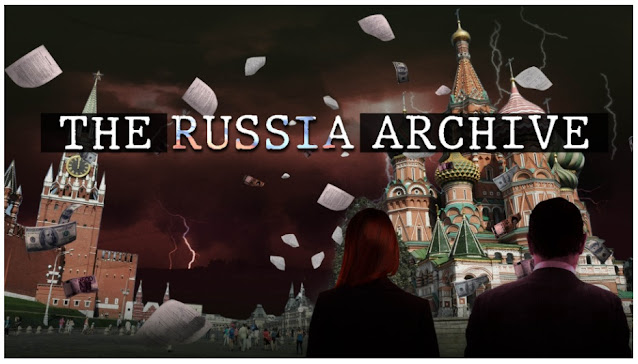
"To highlight and advance what our investigations have uncovered about how the offshore system bolsters networks of wealth behind Putin and his longtime allies, ICIJ is launching the Russia Archive.
"In the Russia Archive, you can explore past ICIJ exposés on the financial secrets of Russian elites, insights on the professional enablers who’ve made it possible for them to move and hide money offshore, and our ongoing coverage of sanctions regimes, dirty money reforms and more."
quarta-feira, 9 de março de 2022
Ukraine and how private sector Intelligence is defining a new world - A Virtual Briefing
É preciso inscrição prévia.

terça-feira, 8 de março de 2022
DEFESA NACIONAL, O QUE É?
Explica-me o que é isso da Defesa Nacional, como se eu fosse muito burro
O termo “defesa nacional” engloba todas as necessidades e o planeamento e preparação para atender às necessidades essenciais de defesa, industrial e militar relativas à segurança, bem-estar e economia nacionais, particularmente resultantes de ações militares ou econômicas estrangeiras.

A Defesa Nacional visa, portanto, preservar a integridade do território nacional e a vida das pessoas, bem como defender os interesses vitais dos países e dos seus aliados. Assim sendo, podemos considerar que a Defesa Nacional é o conjunto de ações adotadas pelos Estados para garantir a sua sobrevivência contra riscos e ameaças.
O objetivo da defesa nacional é, em tempos de paz, preparar o país para uma possível conflagração. E, se se tratar de um conflito aberto, conduzir a guerra e alimentá-la, protegendo a população, o solo e os recursos.
O objetivo da estratégia de segurança nacional é então o de identificar todas as ameaças e riscos que possam afetar a vida da Nação, em particular no que diz respeito à proteção da população, à integridade do território e à permanência das instituições da República, e determinar as respostas que as autoridades públicas devem fornecer.
Uma política de defesa nacional coerente é uma das políticas setoriais fundamentais no setor da segurança. As políticas de defesa devem ser derivadas de políticas e estratégias de segurança nacional devidamente acordadas. A análise e consulta das necessidades da política de defesa normalmente resulta no que é frequentemente chamado de Livro Branco da Defesa que, uma vez aprovado pelos governos, estabelece diretrizes políticas para o setor da defesa durante o período da sua vigência.
Tal como acontece com todas as outras áreas da política, as configurações da política de defesa devem ser mantidas sob revisão contínua. Inevitavelmente, com o passar do tempo, as configurações de políticas tornar-se-ão irrelevantes para o ambiente estratégico, político, econômico, tecnológico ou social, caso em que uma nova estratégia de desenvolvimento de políticas será provavelmente necessária. Uma vez que as atividades, estruturas de forças, ou planos de reequipamento, bem como os orçamentos previstos divirjam significativamente da política traçada, é provável que seja necessário um reexame das configurações da política, caso em que o processo precisa ser reiniciado.
Mesmo depois de implementada, a política ainda precisa ser monitorizada e avaliada para garantir que atende à intenção política por trás dela.
As nações que enfrentam uma ameaça comum geralmente reúnem os seus esforços de defesa em alianças como a OTAN. Embora a OTAN seja uma aliança formal, as nações também podem cooperar implicitamente em alianças informais, compartilhando responsabilidades e encargos de defesa sem as amarras de uma organização internacional.
Função política soberana, a Defesa é nacional porque diz respeito não só à Defesa Militar e às Forças Armadas, mas também a todas as administrações responsáveis pelas grandes categorias de funções ou recursos essenciais à vida do país. E esta é a conceção global que deve ter-se acerca da Defesa. A Defesa Nacional é, portanto, um dos componentes da política de segurança nacional, e baseia-se nos seguintes princípios:
•
Globalidade, já que diz respeito a toda a população e a todos os setores da
vida do país (defesa civil, econômica e militar);
• Permanência, porque tem de
ser organizada desde tempos de paz;
• Unidade, para isso sendo
liderada pelo governo;
• Proteção dos interesses
fundamentais do país. Esses interesses poderão ser:
-
Interesses vitais, nomeadamente a manutenção da integridade do território
nacional, o livre exercício da sua soberania e a proteção da sua população e
dos seus nacionais no estrangeiro.
-
Interesses estratégicos, que consistem principalmente na manutenção da paz no
país e nas suas zonas limítrofes, nomeadamente no mar e nos céus, bem como na
preservação das condições necessárias ao prosseguimento das atividades
económicas e de comércio;
-
Interesses de poder vinculados às responsabilidades internacionais do país como
membro de uma aliança de defesa;
•
Contribuir para a estabilidade internacional, pois como membro da comunidade
internacional, os países deverão defender os valores da democracia, bem como a
solidariedade entre os Estados. Portugal tem também responsabilidades especiais
como antiga potência colonial, particularmente em África onde procura favorecer
a emergência de soluções regionais. As responsabilidades internacionais dos
países envolvem sua participação em operações de promoção da paz (peace
keeping e peace enforcement);
•
Trabalhar num quadro europeu, uma visão fundamental para os países europeus, que
devem atuar para a emergência de uma Europa forte, embora preservando as
ligações transatlânticas.
•
Pensar a Defesa como uma conceção global. Essa globalidade tornou-se ainda mais
necessária com a proliferação de armas de destruição em massa (nucleares,
radiológicas, bacteriológicas e químicas), a ascensão do terrorismo
internacional, o desenvolvimento do tráfico (drogas, armas, seres humanos,
falsificação...) e crimes cibernéticos.
De
uma forma geral, uma política de Defesa Nacional estruturada deve poder
proporcionar:
Proteção. Trata-se de garantir
a segurança da população e o funcionamento das instituições e das atividades socioeconômicas
do território. Esta função resulta em particular em:
•
implementação de medidas de segurança das atividades de defesa económica
espalhadas pelo território.
•
ação permanente de segurança das ações de polícia (vigilância, neutralização,
etc.);
• uma
posição marítima e uma posição aérea permanentes (assistência, deteção e
interdição de aeronaves, etc.);
•
Implementação de medidas de segurança dos sistemas de informação;
•
sistemas implementados pelas autoridades civis, em caso de desastres naturais
ou industriais;
Prevenção, Consiste em
antecipar ou reduzir o nível de crises para evitar o uso da força. Baseia-se
em:
•
ação diplomática para uma solução pacífica de conflitos;
• uma política de controlo de armamento;
•
recursos de inteligência estratégica (interceção de satélites de
telecomunicações e observação);
• arranjos de cooperação militar para ajudar os
países com os quais temos acordos de defesa de resolução de conflitos;
• dispor de forças de intervenção rápida.
Projeção
de Força e Poder, caso as medidas preventivas não forem capazes de evitar uma
eclosão militar. O ato pode ocorrer com uma simples presença, ou com o
destacamento de forças beligerantes.
Conhecimento e antecipação, fundamental para uma ação bem sucedida. Daí a necessidade de dispor de mecanismos eficazes de Inteligência, a todos os níveis (estratégica, económica, etc.)
Em suma, a defesa nacional diz respeito a todos os setores do país. Exige uma organização que cubra não só solo tradicional, mas também dos mares e espaços aéreos. Tem de constituir uma organização completa, bem estabelecida, de implementação instantânea, estável e válida tanto no quadro nacional como no quadro inter-aliado.
Podemos então olhar para a política de Defesa Nacional em três dimensões analíticas. Em primeiro lugar, a política militar, que é o conjunto de decisões destinadas a regular o comportamento político que as Forças Armadas geralmente tendem a desenvolver. Esta dimensão visa fortemente alcançar o controlo civil.
Em segundo lugar, a dimensão estratégica que pode ser definida como as ações, atitudes e medidas estratégicas destinadas a prevenir ou enfrentar diferentes situações de risco, conflito ou ameaças, potenciais ou reais, que ponham em perigo os interesses vitais e estratégicos de um país e que exijam a utilização do Instrumento Militar. Essa dimensão está relacionada à liderança político-civil da Defesa Nacional.
Em
terceiro lugar, a dimensão internacional, que é aquela que contribui para a
Política Externa e é definida como a política de defesa internacional. Esta
última dimensão é a que deve permitir a articulação entre a Política de Defesa
e a Política Externa, pelo menos de duas maneiras.
Primeiro, contribui para a Política de Defesa por meio do que os militares chamam de manobra diplomática.
Em segundo lugar, a Política de Defesa é essencial para a Política Externa porque num cenário de incerteza estratégica, onde não está claro quem ou o que é a ameaça, nem a sua magnitude, nem a sua intenção e direção, ela amortece, embora não eliminando os riscos de adoção de uma determinada atitude e posicionamento estratégico. Da mesma forma, a Política de Defesa é essencial para dar credibilidade à Política Externa.
A relação entre estas duas vertentes não termina aqui. A Política Externa precede a Política de Defesa. De facto, seguindo Carl von Clausewitz, consideramos que a guerra é um fato social, mas fundamentalmente político. Consequentemente, como argumentou Raymond Aron, a guerra surge da política, determina a sua intensidade, define o seu motivo e estabelece os seus objetivos políticos. A guerra termina quando os objetivos políticos são alcançados ou, melhor ainda, quando a política afirma que os seus objetivos foram alcançados. Os objetivos da guerra não são militares. Os objetivos estratégicos militares são uma função dos objetivos políticos. Se não há objetivos políticos não há guerra.
A Defesa Nacional regulamenta assim a obrigação essencial e indelegável do Estado, onde devem convergir todos os esforços necessários para a preservação dos interesses vitais da República. Que tanto o Sistema de Defesa quanto o seu Instrumento Militar se justificam com base na própria existência do Estado e não na definição de um determinado cenário temporal e das suas correspondentes ameaças, e que a sua essência está relacionada ao eventual exercício do monopólio da força para a resolução do conflito em todos os seus âmbitos, da crise à guerra ou ao conflito armado internacional, conforme determinado pelo poder executivo. É então da responsabilidade política estabelecer os parâmetros e critérios a ter em conta para a missão, organização e funcionamento do Sistema de Defesa em geral e, em particular, das Forças Armadas para que se tornem um verdadeiro instrumento de dissuasão, de acordo com a perceção de ameaças aos interesses da Nação e seus correspondentes riscos presentes e futuros. Essa dissuasão é uma das formas de atuação e expressão da Defesa Nacional.
Assim sendo, a Defesa Nacional é também todo o conjunto de disposições, decisões e ações que o Estado adota para garantir a sua própria existência e, ao mesmo tempo, proteger o desenvolvimento do país.
A Defesa Nacional enfrenta um conjunto de problemas complexos e permanentes em cuja solução intervêm igualmente os mais altos órgãos de direção política do Estado, os dirigentes das entidades económicas, sociais, culturais, públicas e privadas, bem como as Forças Armadas.
Finalmente, a Defesa Nacional é obrigação de todos os cidadãos, governantes e governados, bem como estrangeiros residentes no país, sem distinção de raça, credo, partido político, idade e sexo.
Sérgio Campos
(Presidente do Círculo de Estratégia D. João)
sábado, 5 de março de 2022
Ucrânia: Vice-presidente do Brasil Diverge de Bolsonaro
Contra a invasão da Ucrânia, 0 vice-presidente do Brasil, General Hamilton Mourão, declarou em nome do governo:
“O Brasil não está neutro. O Brasil deixou muito claro que respeita a soberania da Ucrânia.”

O vice-presidente do Brasil também apoiou o uso da força militar contra os russos e comparou Putin a Hitler.
Uma declaração nos antípodas da posição putinista do presidente Bolsonaro...
O vice-presidente da República, general Hamilton Mourão, defendeu hoje (24) a soberania da Ucrânia, apoiou o uso da força na região para conter os russos e comparou o presidente da Rússia, Vladimir Putin, ao ditador alemão nazista Adolf Hitler (1889-1945).
"O mundo ocidental está igual ficou em 1938 com o Hitler, na base do apaziguamento, e o Putin não respeita o apaziguamento", afirmou ele a jornalistas nesta manhã. "O Brasil não está neutro. O Brasil deixou muito claro que respeita a soberania da Ucrânia."...
Há alguns dias, o presidente Jair Bolsonaro (PL) disse que Putin era uma pessoa de "paz". Mourão não quis responder sobre essa avaliação feita antes. "Não comento palavras do presidente."
sexta-feira, 4 de março de 2022
Putin: Ambições, Forças e Fraquezas da Rússia
A 'Diplomatie' (ao contrário de 'boa gente' que anda por aí...) não se deixou distrair e, nos últimos anos, tem seguido atentamente o 'jogo' de Putin. Não se deixou, portanto, surpreender pelas jogadas do senhor do Kremlin. Agora, para ajudar a perceber os fundamentos e as razões do que se passa na Ucrânia, oferece a leitura dos conteúdos de um dos seus últimos dossiers dedicado aos 'jogos' do Czar.
"Afin de permettre une meilleure compréhension des évènements qui frappent aujourd'hui l'Ukraine, nous partageons GRATUITEMENT le dernier numéro du magazine DIPLOMATIE consacré à la géopolitique/géostratégie russe, réalisé en collaboration avec l’Observatoire franco-russe (CCI-France-Russie) et le Centre Russie/NEI de l’Institut français des relations internationales (IFRI). Bonne lecture!"

terça-feira, 1 de março de 2022
O Fim do Mundo É Apenas o Princípio... Mapeando o Colapso da Globalização
Peter Zeihan tem sido, desde há muito, uma das referências do IntelNomics, por isso é com muito gosto que apresentamos hoje a próxima obra do Peter:
THE END OF THE WORLD IS JUST THE BEGINNING - Mapping the Collapse of Globalization

2019 was the last great year for the world economy.
For generations, everything has been getting faster, better, and cheaper. Finally, we reached the point that almost anything you could ever want could be sent to your home within days – even hours – of when you decided you wanted it.
America made that happen, but now America has lost interest in keeping it going.
Globe-spanning supply chains are only possible with the protection of the U.S. Navy. The American dollar underpins internationalized energy and financial markets. Complex, innovative industries were created to satisfy American consumers. American security policy forced warring nations to lay down their arms. Billions of people have been fed and educated as the American-led trade system spread across the globe.
All of this was artificial. All this was temporary. All this is ending.
In The End of the World is Just the Beginning, author and geopolitical strategist Peter Zeihan maps out the next world: a world where countries or regions will have no choice but to make their own goods, grow their own food, secure their own energy, fight their own battles, and do it all with populations that are both shrinking and aging.

The list of countries that make it all work is smaller than you think .....
terça-feira, 22 de fevereiro de 2022
“A Europa é um local estranho”, diz George Friedman a propósito da crise na Ucrânia

Europe is a strange place. Afirma o nosso velho amigo Friedman que passa a explicar: On one hand, senior European leaders in Germany and France have sided with the United States in the crisis. Both countries are aware of the fragility of Europe’s eastern front and the need to stiffen it. Poland and Hungary are members of NATO, and as such, Poland should be supported on all levels, while Hungary should be reminded of the benefits of membership as well as its obligations. On the other hand, in spite of declarations by major European leaders, and NATO’s policy and mobilization, the EU seems oblivious to the dangers and allowed serious actions to be imposed at this moment against two significant members of NATO, one committed to defending Europe and the other in need of persuasion. (...) The fact is that there is an insularity that has emerged in Europe since 1991 that holds that the only thing threatening Europe is the exaggerated fears of the Americans, and that the rule of law transcends the reality of tanks. This is a nuisance to the United States but a deep danger for Europe. There are real dangers out there (whether Russia’s military buildup is one or not is irrelevant), and Europe can be blind to them but cannot avoid them. The rule of law does not trump military force. The last is well known to Europe. (...) But it derives from a system of law and governance that is willfully and pleasantly blind to what is out there.
Europe and the Ukraine Crisis
George Friedman | GPF | February 22, 2022
Last week, the European Union’s highest court ruled that Brussels can withhold funding from member states that violate the rule of law, slapping down a legal challenge from Hungary and Poland. The ruling clears the way for the European Commission to levy certain penalties against Budapest and Warsaw, including suspending payments to both countries from the EU’s budget. These payments are in the billions of euros and are important to these countries for sustaining their economies. What is important is that this decision, pending for more than a year, was published in the midst of the face-off with Russia over Ukraine, at a time when Europe needs to present a united front.
Now, courts are known at times to be oblivious to realities outside the courtroom, but not to overwhelming realities. I doubt that two days after Pearl Harbor, an American judge would have sentenced a group of American sailors for drunken brawling; stern warnings would be given and the sailors returned to their ship. There was a war on, and sailors would be fighting it.
Poland and Hungary are part of the line running from the Baltic to the Black Sea that would absorb any Russian attack on Europe. There will likely not be such an attack, but “likely” is not a term much honored in the history of geopolitics. Poland guards the North European Plain, the main path of invasion – in both directions. Poland’s fear of and opposition to Russia is built into its DNA. It recently bought about $6 billion worth of tanks from the United States. Those tanks will stand between Belarus and Germany. The European Court of Justice’s ruling not only grants Brussels the legal authority to divert critical money from Poland, but also signals to Poland that for the EU it is business as usual. Poland may be facing its ancient enemy, but the EU lacks the wit to postpone the ruling.
The Hungarian situation is the opposite of Poland. Viktor Orban, Hungary’s prime minister, visited Russian President Vladimir Putin shortly after the Ukraine crisis broke. He said he agreed with Putin’s demands for security guarantees and was allowed to purchase a great deal of Russian natural gas at a discount. Hungary is not as strategically significant as Poland, but shifting toward alignment with Russia at this time is not in the interest of those resisting a potential attack. The EU should be doing what it can to draw Hungary out of the Russian relationship and into the European system, but instead it chose this moment to chastise Budapest and threaten to cut funding. Orban is not in the minority in Hungary with his distrust of the EU, and the bloc’s action at this moment reduces the chances of drawing Hungary back into the fold.
Europe is a strange place. On one hand, senior European leaders in Germany and France have sided with the United States in the crisis. Both countries are aware of the fragility of Europe’s eastern front and the need to stiffen it. Poland and Hungary are members of NATO, and as such, Poland should be supported on all levels, while Hungary should be reminded of the benefits of membership as well as its obligations. On the other hand, in spite of declarations by major European leaders, and NATO’s policy and mobilization, the EU seems oblivious to the dangers and allowed serious actions to be imposed at this moment against two significant members of NATO, one committed to defending Europe and the other in need of persuasion.
As I said at the beginning, courts must frequently be oblivious to what is happening around them – or at least pretend to be. But there are also times when it is impossible to ignore what is happening. At that point, prudence and a sense of proportion would dictate a postponement of a verdict that runs counter to overriding needs. And when the judges are unable to grasp reality, a retired judge invites someone for lunch. I know that the EU legal system is so pure that the needs of Europe never enter their minds. But the fact is that they are neither so pure nor blind. There was something malicious in acting as they did when they did.
Whether Russia’s actions are real or feigned is not the point. The fact is that there is an insularity that has emerged in Europe since 1991 that holds that the only thing threatening Europe is the exaggerated fears of the Americans, and that the rule of law transcends the reality of tanks. This is a nuisance to the United States but a deep danger for Europe. There are real dangers out there (whether Russia’s military buildup is one or not is irrelevant), and Europe can be blind to them but cannot avoid them. The rule of law does not trump military force. The last is well known to Europe.
The decision to rule against Poland and Hungary is not the pivot of history. But it derives from a system of law and governance that is willfully and pleasantly blind to what is out there.
https://geopoliticalfutures.com/europe-and-the-ukraine-crisis/
domingo, 20 de fevereiro de 2022
Para Perceber a Estratégia de Putin na Ucrânia
Há quase cinco anos (a 12 Setembro 2017), o IntelNomics expunha a estratégia de Putin na Ucrânia e os passos necessários para a entender e ainda apontava alguns dos analistas que já a tinham entendido. Em vésperas da cimeira Trump-Putin, do Verão 2018, José Mateus retomava o tema, no jornal online "Tornado", porque, considerava, "é importante perceber Putin, o seu tabuleiro de jogo e os seus objectivos".
Ler o conselheiro presidencial Vladislav Surkov
"Para perceber a estratégia de Putin na Ucrânia, sua essência, seus modos e seus tempos, há que ler o conselheiro presidencial Vladislav Surkov e, especialmente, o seu livro de “ficção científica”… Aí se descreve um certo tipo de guerra “não-linear”, suas formas e lógicas e também o que move os seus protagonistas. A “ficção científica” de Surkov (que além de escrever é também um dos homens mais poderosos da política russa da última década e um velho e muito chegado colaborador de Putin) ilumina fabulosamente o lado obscuro da acção russa na Ucrânia.
"Talvez por também ser especialista de guerras não-lineares (vidé Brave New War), o nosso amigo John Robb ao olhar para a Ucrânia viu duas coisas: “Putin is using open source warfare” e “In the 21st Century, warfare isn’t politics by other means. Warfare is business by other means”.
E o I.E. concluía, então: "Berlim não sabe no que se meteu e Putine vai explorar o erro europeu na Ucrânia para desestabilizar e alterar toda uma ordem nascida depois da implosão soviética e que é (era) desvantajosa para a Rússia".
Agora, a 29 Agosto 2017, Chris Arkenberg, invocando o “Chaos is a ladder” de Lord Petyr Baelish, (num mundo “fundamentally shaped and held together by digital networks” e em que “programmable media is a very potent weapon”) usa o caso ucraniano para procurar explicar “how Russia is shaping a new world of non-linear war and post-modern geopolitics”.
“Wars aren’t fought to win but rather to confuse"
Para Arkenberg, Vladislav Surkov “is a fascinating figure credited with staffing and directing Ukraine’s separatists and architecting the annexation of Crimea. As a former cabinet member and current adviser to President Putin he represents a new generation of postmodern geopolitics (for lack of a better term) that skewers pretty much everything that the 20th century was built upon.

“Wars aren’t fought to win but rather to confuse. There are reasons to back both dissident political parties and ultra-nationalist Nazis. Information is more powerful than weapons. Everything is PR, even science fiction. (Surkov is also a huge fan of Tupac and Allen Ginsberg.)
“Not only is it extremely important to interpret Putin’s Russia within this context, it’s also critical to understand these methods as the new emerging playbook for geopolitics." .....
Portanto, hoje, só não entende o jogo de Putin, seu tabuleiro, suas regras e seus fundamentos quem não quer.
https://intelnomics.blogspot.com/2017/09/normal-0-21-false-false-false-pt-x-none_12.html
sábado, 19 de fevereiro de 2022
A Escola de 'Sexpionage' do KGB/SVR Apresentada em 'Red Sparrow'
Como são 'fabricadas' as belas operacionais do SVR (ex-KGB) capazes de meterem um 'alvo' na cama (antes de ele perceber como lá foi parar) e de lhe extorquirem tudo o que quiserem? Em 'Red Sparrow' é mostrada a formação das operacionais mas, atenção, a escola forma também "pardais" machos... "Dominika (Jennifer Lawrence) is sent to State School 4, a SVR's brutal specialist training school for 'Sparrows', sexpionage operatives..."

Explicações na Wikipedia:
"In modern-day Russia, beautiful Dominika Egorova is a famous ballerina who supports her ill mother. Following a career-ending injury, Dominika is approached by her uncle Ivan, the Deputy Director of the SVR. She is tasked with seducing Dimitry Ustinov, a Russian gangster, in exchange for her mother's continued medical care. Meeting at a bar, the two go to her private room, where he rapes her. During this act, he is killed by Sergei Matorin, an SVR operative authorized by Ivan. Ivan offers Dominika a choice: become an SVR operative, or be executed for witnessing Ustinov's assassination.
Nate Nash is a CIA operative working in Moscow. While meeting with an asset in Gorky Park, they are confronted by the police. Nash creates a diversion to ensure his asset, a mole in Russian ranks code-named Marble, escapes unidentified. Nash is reassigned back to the U.S. but insists he is the only person with whom Marble will work. Since he cannot return to Russia, he is assigned to Budapest to reestablish contact with Marble, which the SVR also deduce.
Dominika is sent to State School 4, a brutal specialist training school for "Sparrows"—SVR operatives capable of seducing their targets with sexpionage. Dominika excels in her training, despite some friction with her trainer, known only as the Matron. Against the Matron's recommendation, Ivan and General Korchnoi decide that Dominika is ready for an assignment in Budapest—to gain Nash's trust and expose Marble's identity.

In Budapest, Dominika lives with another sparrow named Marta Yelenova, and is supervised by SVR station chief Maxim Volontov. Dominika makes contact with Nash, who quickly determines she is a Russian intelligence operative and attempts to convince her to defect.
Dominika inspects Marta's room and realizes that Marta has been assigned to buy classified intelligence from Stephanie Boucher, the chief of staff to a U.S. Senator. When Ivan pressures Dominika about her slow progress with Nash, Dominika claims to be helping Marta with Boucher as well. Marta is brutally killed by the SVR for apparently sharing her classified mission with Dominika and to warn Dominika what will happen to her if she fails. Dominika contacts Nash, agrees to become a double agent in exchange for protection for her and her mother, and has sex with him. Under Russian orders, Dominika travels to London with Volontov to meet Boucher and complete the trade, but covertly switches out the intelligence Boucher supplies with CIA-supplied disinformation.
When she leaves the meeting, Boucher realizes that she is being observed by American intelligence agents; she panics, backs into traffic, and is struck and killed. Russian agents observing Boucher realize their mission has been compromised. Suspected of tipping off the Americans, Dominika and Volontov are recalled to Moscow where they are tortured and interrogated for days. Volontov is executed, but Dominika's claims of innocence are eventually believed by Ivan, and she is allowed to return to Budapest to continue her original mission of extracting Marble's identity from Nash. Instead, she convinces Nash to relocate her and her mother to America.
After spending the night with Nash, Dominika awakes to find him being tortured by Matorin for Marble's identity. She initially assists Matorin with torturing Nash until Matorin lowers his guard and she kills him, but is badly injured while doing so. She wakes in a hospital where General Vladimir Korchnoi, a high-ranking official working with Ivan, reveals himself as Marble. He explains that he was initially patriotic, but became disillusioned by Russia's corruption. He fears he will be caught soon and, instead of dying in vain, instructs Dominika to expose his identity to Ivan. Doing so would make her a national hero, and allow her to replace him as a mole passing critical intelligence to the CIA. But when Dominika contacts her superiors, she frames Ivan as the mole instead, using evidence she had been fabricating since she first arrived in Hungary, and blaming him for the botched exchange in London. Ivan is killed and Dominika is honored in a Russian military ceremony attended by Korchnoi.

Back in Russia, Dominika lives with her mother, and receives a phone call from an unknown person who plays Grieg's piano concerto, which she previously had told Nash was the piece to which she danced her first solo performance."
Subscrever:
Mensagens (Atom)

-
 Se este texto de Denny Roy tivesse sido publicado há um ano seria um escândalo que provocaria uma zaragata nos meios político-mediáticos am...
 -
 Yes, your phone is spying on you Quartz Daily Brief | 27 Jan. 2018 If you’re using an Android phone, David Yanofsky discovers, Goog...
 -
Shah Gilani, um experiente e muito bem sucedido consultor de investimentos (e também uma das nossas habituais FBI's, fontes bem infor...
